
How AI Drones Respond to Highway Medical Emergencies
- NAGA RISHIKH CHERUKUMALLI Class 4
- Nov 9, 2025
- 4 min read

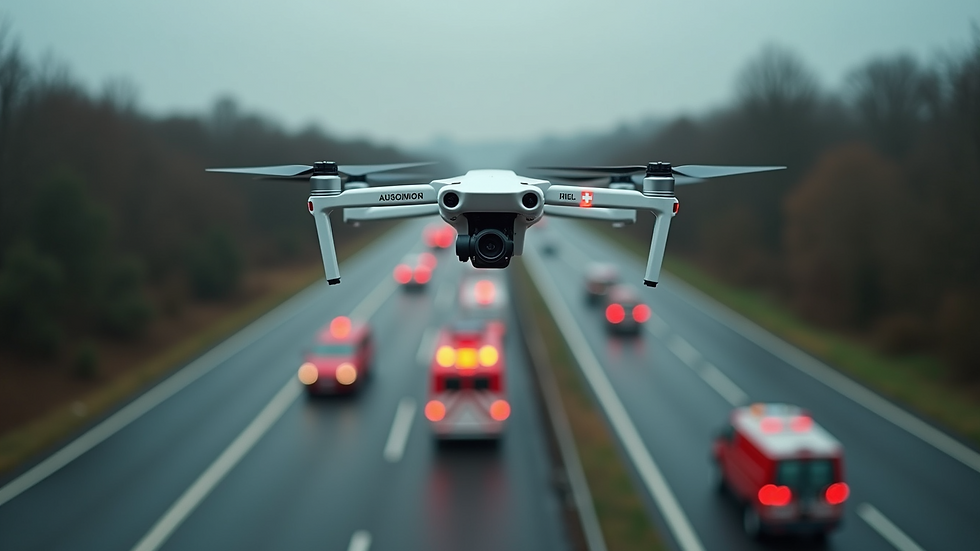
Highway medical emergencies present unique challenges. Traffic congestion, remote locations, and delayed ambulance arrival times often worsen patient outcomes. In recent years, AI-powered drones have emerged as a promising solution to improve emergency response on highways. These drones can quickly reach accident scenes, provide real-time data, and deliver critical medical supplies before traditional help arrives. This post explores how AI drones operate in highway medical emergencies, their benefits, and real-world examples of their impact.

Why Highway Medical Emergencies Need Faster Response
Highways are prone to high-speed collisions and multi-vehicle accidents. When accidents happen, every second counts. Delays in medical assistance can lead to severe complications or death. Traditional emergency response faces obstacles such as:
Traffic jams slowing ambulances
Difficulty locating accident sites in remote areas
Limited availability of first responders during peak times
Faster response times can save lives by stabilizing patients early and preparing hospitals with accurate information before arrival. This is where AI drones come into play.
How AI Drones Work in Medical Emergencies
AI drones combine autonomous flight technology with artificial intelligence to perform specific tasks during emergencies. Their operation typically follows these steps:
Incident Detection
AI systems monitor highway cameras, sensors, or emergency calls to detect accidents automatically.
Rapid Deployment
Once an incident is confirmed, drones launch from nearby stations or vehicles and fly directly to the scene.
On-Site Assessment
Equipped with cameras and sensors, drones provide live video feeds and environmental data to emergency teams.
Medical Supply Delivery
Drones can carry essential items such as first aid kits, automated external defibrillators (AEDs), or medications.
Communication Relay
They act as communication hubs, connecting stranded victims, bystanders, and emergency responders.
Data Analysis
AI algorithms analyze the situation, prioritize care, and assist dispatchers in allocating resources efficiently.
Benefits of Using AI Drones on Highways
AI drones bring several advantages to emergency medical services on highways:
Faster Arrival Times
Drones can bypass traffic and reach accident sites within minutes, often before ambulances.
Improved Scene Assessment
Real-time aerial views help responders understand the severity and exact location of injuries.
Early Medical Intervention
Delivering AEDs or first aid supplies enables bystanders to provide immediate care.
Enhanced Safety for Responders
Drones reduce the need for emergency personnel to enter dangerous traffic zones initially.
Cost-Effective and Scalable
Operating drones is less expensive than deploying additional vehicles and personnel.
Real-World Examples of AI Drones in Action
Several regions have started integrating AI drones into their emergency response systems with promising results.
Sweden’s Drone Ambulance Trials
Sweden conducted trials where drones equipped with AEDs were dispatched to cardiac arrest victims on highways. The drones arrived on average 16 minutes faster than ambulances. Early defibrillation improved survival rates significantly.
United States Pilot Programs
In some U.S. states, AI drones assist highway patrol units by providing live video feeds during multi-vehicle crashes. This helps dispatchers send the right number of ambulances and fire trucks, reducing response times and resource waste.
China’s Emergency Drone Network
China has developed a network of AI drones stationed along major highways. These drones autonomously patrol and respond to accidents, delivering first aid kits and communicating with victims until help arrives.
Challenges and Considerations
While AI drones offer many benefits, some challenges remain:
Regulatory Hurdles
Airspace regulations and privacy concerns require clear policies for drone operation.
Technical Limitations
Weather conditions like heavy rain or strong winds can affect drone performance.
Integration with Existing Systems
Emergency services need to adapt workflows to incorporate drone data effectively.
Battery Life and Range
Drones must have sufficient power to cover long highway stretches and return safely.
Addressing these issues will be crucial for wider adoption.
What the Future Holds for AI Drones in Medical Emergencies
Advancements in AI, battery technology, and communication networks will enhance drone capabilities. Future developments may include:
Swarm Drones
Multiple drones working together to cover large accident scenes or deliver various supplies simultaneously.
Advanced AI Diagnostics
Onboard AI could analyze victims’ conditions using thermal imaging or other sensors.
Integration with Autonomous Vehicles
Drones coordinating with self-driving ambulances for seamless patient transport.
Expanded Coverage
Deployment along rural highways and remote areas where emergency response is slower.
These innovations will further improve survival rates and emergency care quality.
How Communities Can Support AI Drone Programs
Communities and local governments can play a role in adopting AI drones for highway emergencies by:
Funding pilot projects and research
Creating clear regulations for drone use
Educating the public about drone benefits and safety
Collaborating with technology providers and emergency services
Public support and awareness will accelerate the integration of this life-saving technology.
AI drones are transforming how emergency medical services respond to highway accidents. Their speed, precision, and ability to deliver critical care early make them a valuable tool in saving lives. As technology advances and adoption grows, AI drones will become an essential part of highway safety and emergency response systems.
If you want to learn more about how AI is changing emergency services or explore drone technology, stay tuned for upcoming posts. Your safety on the road could soon depend on these flying lifesavers.

Comments