
Revolutionizing Highway Safety with Autonomous Medical Drones
- NAGA RISHIKH CHERUKUMALLI Class 4
- Nov 9, 2025
- 4 min read

Highway accidents claim thousands of lives every year, and timely medical intervention often makes the difference between life and death. Emergency response teams face challenges reaching accident sites quickly, especially in remote or congested areas. Autonomous medical drones offer a promising solution to this problem by delivering critical medical supplies and support faster than traditional methods. This technology is transforming highway safety and emergency care in ways that could save countless lives.
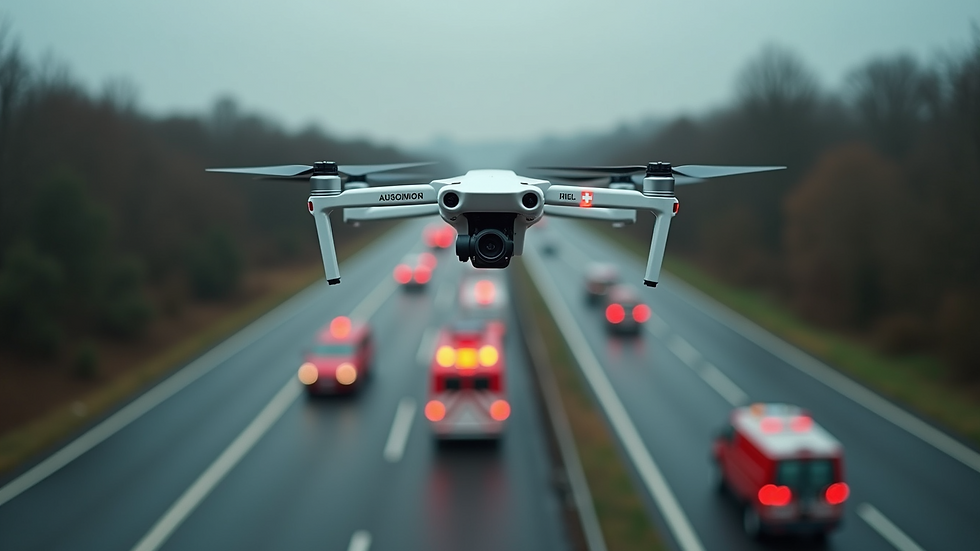
How Autonomous Medical Drones Work
Autonomous medical drones are unmanned aerial vehicles equipped with medical supplies such as first aid kits, defibrillators, and medications. These drones use GPS navigation and real-time data to fly directly to accident sites without human pilots. Their ability to bypass traffic and reach remote locations quickly makes them ideal for emergency response on highways.
Key features include:
Automated flight paths based on accident location data
Real-time communication with emergency responders and hospitals
Payload capacity designed for essential medical equipment
Obstacle detection and avoidance to ensure safe travel
By integrating with emergency dispatch systems, drones can be deployed immediately after an accident is reported, arriving minutes before ambulances in many cases.
Benefits for Highway Safety
The introduction of autonomous medical drones improves highway safety in several important ways:
Faster Medical Assistance
Time is critical after a highway accident. Drones can reach victims faster than ground vehicles, especially in traffic jams or difficult terrain. Early delivery of life-saving devices like automated external defibrillators (AEDs) can stabilize patients until paramedics arrive.
Reduced Emergency Response Time
Studies show that drones can cut response times by up to 50% in some scenarios. This reduction can significantly improve survival rates for severe injuries such as cardiac arrest or major trauma.
Support for Remote and Rural Areas
Highways often stretch through rural regions where emergency services are sparse. Drones can bridge this gap by delivering medical aid quickly, providing a vital link in the chain of survival.
Lower Costs and Resource Use
Deploying drones reduces the need for multiple emergency vehicles and personnel to be dispatched immediately. This can save resources while maintaining high-quality care.
Real-World Examples of Medical Drone Use
Several pilot programs and real-world deployments demonstrate the impact of autonomous medical drones on highway safety:
Sweden’s Drone Ambulance Project
In Sweden, drones equipped with AEDs have been tested on highways to assist cardiac arrest victims. The drones arrived on average 16 minutes faster than ambulances, improving chances of survival.
United States Medical Drone Trials
Trials in rural parts of the U.S. have shown drones delivering blood supplies and trauma kits to accident sites inaccessible by road during emergencies.
China’s Emergency Drone Network
China has developed a network of medical drones stationed along major highways to provide rapid response in case of accidents, reducing fatality rates in pilot regions.
These examples highlight the growing acceptance and effectiveness of drone technology in emergency medical services.
Challenges and Considerations
While autonomous medical drones offer many benefits, several challenges must be addressed for widespread adoption:
Regulatory Approval
Airspace regulations vary by country and region. Authorities must develop clear rules for drone flights, especially over highways and populated areas, to ensure safety and privacy.
Technical Limitations
Battery life, payload capacity, and weather conditions can affect drone performance. Ongoing improvements in drone technology are needed to overcome these limitations.
Integration with Emergency Services
Effective use requires seamless communication between drones, dispatch centers, and medical teams. Systems must be designed for easy coordination and data sharing.
Public Acceptance
People may have concerns about privacy, noise, or safety related to drones flying overhead. Public education and transparent policies can help build trust.
The Future of Highway Emergency Response
As technology advances, autonomous medical drones will become more capable and reliable. Future developments may include:
Artificial intelligence to optimize flight routes and predict accident hotspots
Expanded payloads carrying advanced medical devices or even telemedicine equipment
Swarm technology allowing multiple drones to coordinate and cover larger areas
Integration with autonomous vehicles for combined ground and air emergency response
These innovations will further reduce response times and improve outcomes for highway accident victims.
What This Means for Drivers and Communities
Drivers can expect safer highways as emergency response becomes faster and more efficient. Communities, especially those in rural areas, will benefit from improved access to emergency care. Insurance companies and policymakers may also see reduced costs related to accident injuries.
To support this progress, stakeholders should:
Encourage investment in drone technology for emergency services
Advocate for clear regulations that enable safe drone operations
Promote public awareness about the benefits and safety of medical drones
Summary
Autonomous medical drones are changing how emergency care reaches highway accident victims. By delivering critical medical supplies quickly and efficiently, these drones reduce response times and improve survival chances. While challenges remain, ongoing advancements and real-world successes point to a future where drones play a vital role in highway safety. Supporting this technology today can lead to safer roads and better outcomes for everyone.
If you want to learn more about how technology is improving emergency response or get involved in local initiatives, consider reaching out to your community’s emergency services or technology groups. Together, we can help save lives on the road.


Comments